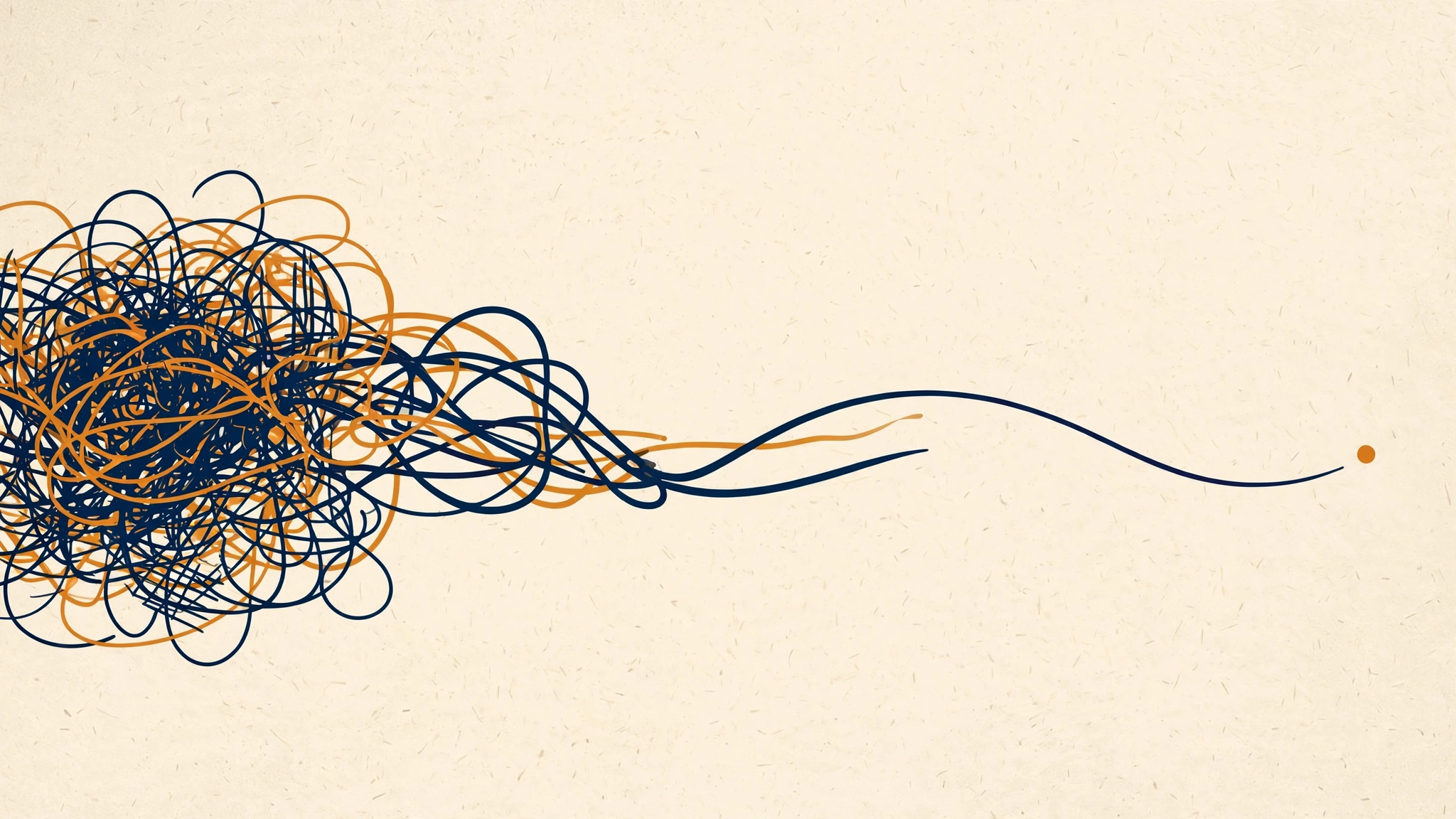
You know the feeling. Your inbox is open, your phone is buzzing, three browser tabs are arguing with each other, and one of them is playing music from somewhere you cannot locate. You have been busy for hours. You could not tell anyone what you finished.
That is the "fried" state. Nobody ordered it, and it arrives without sunny-side-up optimism. The mind is not broken. It is holding too many open loops at once, and each one keeps asking for a little attention. The result is a brain that feels like a pan left on high heat: lots of sizzle, no breakfast.
The opposite state is the one people call flow: attention settles on one thing, the next step is obvious, and the work starts to move. This article is about the short walk between the two. It borrows from the practices taught in the two-day Silva UltraMind ESP seminar, and it turns them into a ten-minute reset you can try at your desk, at your kitchen table, or in a parked car before you walk into a meeting.
A quick note on words. "Fried" and "flow" are everyday metaphors here. They are not diagnoses, and this is not a promise that you will float through your afternoon. It is a method for choosing one useful action when everything feels loud. Results vary from person to person and from day to day.
Why more effort rarely un-fries a fried mind
When we feel scattered, the instinct is to push harder. Add another list, open another app, drink another coffee. Pushing harder at a scattered mind tends to produce more scatter, because the problem is not a shortage of effort. It is a shortage of one clear target.
Think of a flashlight. Spread across a whole room, the beam shows everything dimly. Narrowed to a single spot, it shows one thing clearly. The reset below narrows the beam in three moves: settle, aim, and rehearse.
Step 1: Name the pile (two minutes)
Take a sheet of paper and write everything that is competing for you. Do not sort it. Do not be polite about it. "Reply to Dana," "taxes," "why is the car making that noise," and "buy lemons" can sit on the same page.
This step does something simple. A thought that lives on paper no longer has to be held in your head. Once the pile is visible, circle the one item that would make the rest of the day easier if it moved forward. Only one. The others are not cancelled. They are waiting their turn.
Step 2: Settle with guided relaxation (three minutes)
Sit somewhere you will not be interrupted for a few minutes. Close your eyes. Let your shoulders drop away from your ears, unclench your jaw, and let your hands go heavy. Move your attention through your body from head to feet, letting each area loosen as your attention passes through it. Breathe slowly and comfortably, without forcing anything.
In Silva UltraMind ESP, this kind of guided relaxation is the doorway to a state taught as Alpha, a teaching term for relaxed, alert focus. The goal is not sleep and it is not a trance. The goal is a body that is quiet and a mind that is still awake enough to choose.
If you only get a little quieter, that counts. A fried mind does not need a perfect meditation. It needs a lower volume.
Step 3: Aim with the 3-2-1 sequence (two minutes)
The 3-2-1 sequence is a guided focus practice taught in the seminar. In plain terms, it moves attention through three stages:
- Release the outer distractions. The traffic noise, the notification you are tempted to check, the conversation you replayed twice this morning. Let each one go by without following it.
- Bring your attention inward. Notice your breathing, your posture, the quiet feeling of being in your own body.
- Form a clear, constructive picture. Hold one calm image in your mind, which is the subject of the next step.
Each stage is a small decision about where your attention goes. That is the quiet skill underneath the whole reset. You are not trying to stop thoughts. You are practicing the act of steering.
Step 4: Picture one doable first action (two minutes)
Now return to the item you circled. Resist the urge to picture the entire finished project. A big picture invites a big sigh. Instead, picture the first small action done well.
If the item is "taxes," the picture is not a completed return. It is you at the table with the folder open, finding the first slip of paper and setting it in a pile. If the item is a hard email, the picture is the subject line typed and the first sentence written. Keep the image calm, specific, and a little ordinary. Ordinary is useful because it is believable.
This is constructive visualization: a picture that points toward something you can actually do, not a fantasy about how it all works out.
Step 5: Rehearse it, then do it (one minute, then the real thing)
Run the action through your mind once, from start to finish, as if you were watching yourself do it. See where you sit. See your hand reach for the folder or the keyboard. Notice the first thirty seconds and what you do in them.
Mental rehearsal works as a warm-up. Athletes, musicians, and presenters use versions of it before they perform, because a step you have already walked through once feels less like a leap. When you open your eyes, take a slow breath and start. Do not wait for a mood. Go straight to the first thirty seconds you just rehearsed.
Set a timer for twenty-five minutes if it helps. One item, one timer, one clear target. If your mind wanders, come back to the picture and begin again.
What "flow" looks like in real life
Do not expect fireworks. For most people, the first sign is smaller and more welcome: the tabs matter less, the task has edges, and the next move is clear enough to take. Some days that lasts an hour. Some days it lasts ten minutes, and you repeat the reset after lunch. Both are fine. A reset is something you practice, and practice gets smoother with repetition.
Here is the cheat sheet, small enough to stick on a monitor:
- Write the pile. Circle one item.
- Relax your body with a slow, guided scan.
- Run 3-2-1: release outer distractions, go inward, form a clear picture.
- Picture the first small action done well.
- Rehearse it once, then start.
A word on when a reset is not enough
A ten-minute exercise helps with an overloaded afternoon. It does not replace professional support. If exhaustion, anxiety, or low mood is following you for weeks, please talk with a qualified medical or mental-health professional. The Silva UltraMind ESP seminar is an educational program in personal development. It does not diagnose, treat, or cure any condition.
Practicing with others makes it stick
Reading about these techniques is a good start. Practicing them with an instructor is a different experience. The two-day Silva UltraMind ESP seminar with Paul Sahota is an educational program covering guided relaxation, mental focus, self-awareness, constructive visualization, and personal development. You learn the 3-2-1 sequence and mental rehearsal step by step, so that the reset above becomes familiar enough to use when your mind is at its most scrambled.
Until then, try the ten-minute version tomorrow at the first sign of sizzle. Your future self, calmly holding one clear action instead of forty-seven tabs, will notice the difference.
Practice with guidance: Explore the two-day Silva UltraMind ESP seminar with Paul Sahota