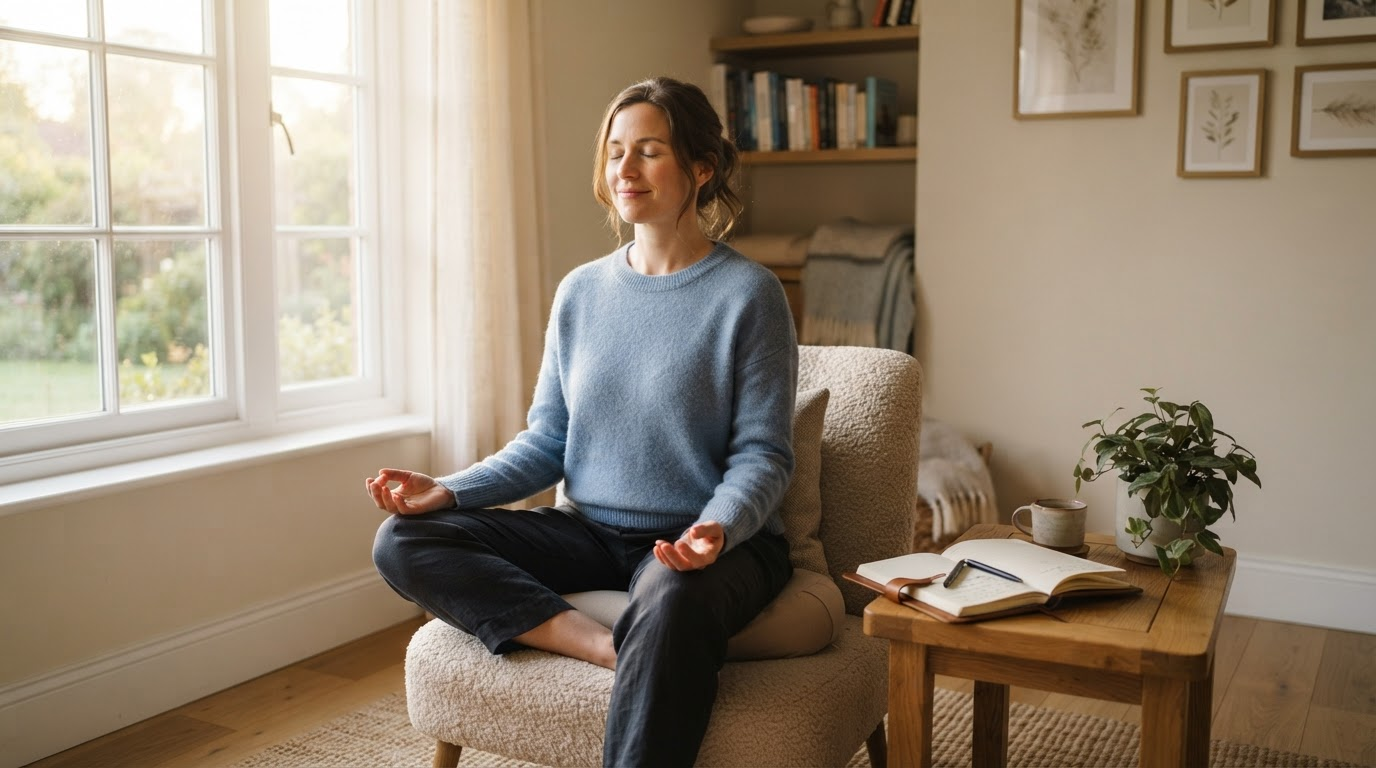
How to Relieve Stress
Feel that familiar tension building? A tight jaw, shallow breaths, a mind racing ahead to what might go wrong. Stress shows up in the body as clenched muscles or fatigue, and in the mind as scattered thoughts or sharp irritability. It pulls your attention from what matters, leaving you restless and reactive. As a certified professional coach, I have guided countless ambitious professionals, caregivers, and seekers through these moments. The good news is you can build practical tools to regain calm and clarity, right where you are: at your desk, before bed, or in the midst of a tough day.
We are not aiming to banish every challenge or paste on forced optimism. Instead, these stress relief techniques offer more choice, quicker recovery, fresh perspective, and steps toward constructive action. You deserve that grounded peace of mind.
A Note on Your Safety First
This content shares general educational ideas for relaxation techniques and how to calm your mind. It is not medical advice or a substitute for professional care.
Consult a qualified doctor or mental health professional for ongoing stress, anxiety, depression, trauma responses, sleep issues, substance use, or anything that worries you or affects daily function.
Seek urgent medical help for emergencies like chest pain, breathing difficulty, fainting, or thoughts of self-harm.
If breathing exercises, scans, or relaxation increase distress, dizziness, or panic, pause and adapt. Keep breaths comfortable and gentle, with a natural longer exhale.
Your 2-Minute In-the-Moment Reset
When stress hits hard, try this simple sequence. It takes about two minutes and works anywhere.
0-30 seconds: Slow your breath comfortably. Inhale gently through your nose for a count of 4, exhale through your mouth for 6. No strain, just ease.
30-60 seconds: Orient to your surroundings. Name three things you see, two you hear, one you feel against your skin.
60-90 seconds: Soften your jaw and let your shoulders drop. Feel the release.
90-110 seconds: State what is happening in one clear sentence, like "I feel overwhelmed by this deadline."
110-120 seconds: Pick one next step, such as "I will check my top priority."
Optional: Step outside for fresh air or call a trusted friend. This reset interrupts the cycle and restores choice.
14 Practical Steps to Reduce Stress
These how to relieve stress steps build on each other. Start with one or two, then layer in more for lasting calm.
Notice and name the stress signal without judgment. Scan for tightness in your chest or a racing pulse. Say, "This is stress speaking." Awareness alone softens its grip.
Separate current facts from predictions and worst-case stories. Ask, "What do I know for sure right now?" Facts ground you; stories fuel the storm.
Use comfortable slow breathing with a longer, unforced exhale. Sit or stand tall. Breathe in for 4, out for 6-8. Repeat 5 times. Feel your nervous system settle.
Relax the body with a brief scan or gentle release. Start at your toes, tense and release each group up to your head. Or just sigh deeply and shake your hands.
Create a calm, relaxed mental state before deeper practice. Find a quiet spot, close or soften your eyes, settle for 30 seconds. Let thoughts drift like clouds.
Write a personal Beneficial Statement that feels believable and action-oriented. Try "I pause, breathe, and choose my next clear step" or "Pressure comes, yet I respond with calm focus." Repeat it mentally a few times.
Practice MentalVideo-style visualization: Rehearse yourself handling the situation calmly. Picture the scene in first person: See obstacles arise, watch yourself breathe and respond steadily. Keep it realistic, focusing on your actions.
Ask a constructive problem-solving question and list two realistic options. "What small move helps here?" Write: Option A, pros/cons; Option B, same. Clarity emerges.
Apply an ethical filter: Choose paths that respect others and stay practical. Consider those affected, aim to improve without harm, and stick to what is possible for you.
Take one small physical action to ease pressure or advance. Stand and stretch, delete a nagging email, or pour water. Motion breaks inertia.
Set boundaries on draining inputs like constant messages or news. Silence notifications for 30 minutes or say, "I will check email at 3 PM." Protect your focus.
Support your body with steady basics. Eat balanced meals, sip water hourly, aim for 7 hours sleep, walk daily, seek daylight. These anchor mental calm.
Turn to personal practices like journaling, gratitude, prayer, music, or nature. Spend 5 minutes on what resonates with your beliefs. Let it recharge you.
Review what worked and craft a simple routine. Note, "Breathing helped most today." Repeat successes daily, not just in crisis.
A 10-Minute Daily Stress-Relief Practice Inspired by Silva UltraMind Method
Do this in the morning for a steady day or evening for restful sleep. Stay comfortable; adjust as needed.
Settling (1 minute): Sit quietly, eyes closed softly. Breathe naturally.
Breathing (1-2 minutes): Slow inhales, longer exhales. Feel ease spread.
Body scan (2 minutes): Release tension from head to toes.
Beneficial Statement (1 minute): Repeat yours 3-5 times with feeling.
Visualization rehearsal (2-3 minutes): MentalVideo your calm handling of a real challenge.
Action planning (1 minute): Note one step forward.
Reflection and return (1 minute): Notice calm, open eyes gently.
Before bed, keep it light to avoid rumination.
Flexible 7-Day Stress-Relief Plan
Adapt this to your life. No promises of instant transformation, just steady practice.
Day 1: Awareness Name stress signals 3 times today.
Day 2: Breath Do 2-minute breathing 4 times.
Day 3: Body relaxation Full scan morning and night.
Day 4: Beneficial statements Write and repeat one personal phrase.
Day 5: Mental rehearsal Visualize handling one upcoming moment.
Day 6: Boundaries Set one limit on a drain, like phone checks.
Day 7: Review Journal what helped; plan your routine.
Real-Life Examples: Applying These Techniques
Work Overload
Signal: Racing thoughts. Statement: "I handle one task at a time." Visualization: See yourself list priorities calmly. Action: Tackle the top item for 15 minutes.
Difficult Conversation
Signal: Tense stomach. Statement: "I listen and speak my truth steadily." Visualization: Breathe through tension, respond clearly. Action: Practice opener aloud.
Worry Before Presentation
Signal: Shallow breath. Statement: "I share what I know with poise." Visualization: Walk through slides, handle a question smoothly. Action: Rehearse key slide.
Caregiver Stress
Signal: Shoulder knots. Statement: "I give from a place of rest." Visualization: Delegate one task calmly. Action: Schedule 10-minute break.
Trouble Winding Down at Night
Signal: Busy mind. Statement: "My body rests deeply now." Visualization: Drift into peaceful sleep. Action: Dim lights, no screens 30 minutes prior.
Stressful Decision
Signal: Headache. Statement: "I weigh options with clear eyes." Visualization: Review pros/cons tranquilly. Action: Sleep on it, decide tomorrow.
Journaling Prompts for Clarity
What is in my control in the next ten minutes?
What is fact, and what is my prediction?
What response would reflect my values?
What small action would create more room to breathe?
Where did I feel calm today, even briefly?
What boundary could I set tomorrow?
How can I support my body right now?
Common Mistakes to Avoid
Pushing stress away instead of noticing it.
Forcing statements that ring false; make them yours.
Visualizing to control others or outcomes; focus on your response.
Seeing every thought as a dire signal.
Using meditation to dodge needed action.
Leaning on caffeine or distraction long-term.
Trying to fix all at once; one step suffices.
Judging yourself for seeking these tools.
Grounded Practices from Silva UltraMind Method
Relaxed mental practice, supportive statements, visualization for stress, and focused questions can aid reflection, attention, and helpful behaviors. These draw from Silva teachings on grounded consciousness. They support how to reduce stress yet do not promise cures or replace professional care.
For structured Silva UltraMind ESP training, visit Silva UltraMind ESP training. Deeper support awaits through 1-on-1 coaching or booking a call. Explore inner principles in The Master Key System, or start with our self-assessment quiz.
Step Into Your Calm Today
Peace of mind comes from practice, not perfection. Pick one tool from these stress relief techniques, like the 2-minute reset or a Beneficial Statement. Use it today, then tomorrow. You are built for clarity and purposeful action. Become who you were created to be, one grounded breath at a time.
Visit my site and get instant access to the Silva Genius course: https://www.silvagenius.com/landing/
To Your Peaceful Success,
Coach Paul
Ready to train your mind? Explore Silva UltraMind ESP.